
York County Previous Residents by Era
The strongest route to York County previous residents changes with the period. Begin with the parcel and the newest recorded transfer, then move through the Register of Deeds, its counter route, and older microfilm. A name in a deed identifies a recorded party; it does not prove that person occupied the address. For the household layer, compare city or cross-reference directories with census, newspaper, obituary, probate, cemetery, and school evidence. The table separates these sources so each can answer the question it is suited to answer.
| Source | Years It Covers | Where Held | What It Shows |
|---|---|---|---|
| Online Register of Deeds deeds | Jan. 1, 1979-current | York County Online Record System | Recorded transfer and land-deed index placement |
| Online Register of Deeds plats and mortgages | All plats; mortgages July 1, 1982-current | York County Online Record System | Plat and mortgage records with their own web coverage |
| Register of Deeds counter route | 1977-1983 and record-type gaps | York County Register of Deeds | Guidance through the documentary handoff |
| Deed microfilm | 1785-1977 | Historical Center Search Room | Older recorded deed chain |
| Conveyance books | 1786-1950 | South Carolina Department of Archives and History | State-archival land records |
| Rock Hill city directories | Twentieth century; annual or biennial, complete local run not published | York County Library South Carolina Room | Head-of-household, address, and surname trail |
| Historical Center directories | Dates not publicly enumerated | Historical Center Search Room | Directory, annual, cemetery, and local-history context |
| U.S. federal census | 1790-1950 public releases | Census and genealogy access points | Household composition at the census date |
| Rock Hill Sanborn maps | 1894 | Library of Congress | Building and street context, not occupants |
| County permits and assessment records | Current or varying; assessment data maintained as of 2020 | County or city custodian | Construction attributes and later change evidence |
The York County Register of Deeds name search is the official online start for the recent land-record portion of the trail.
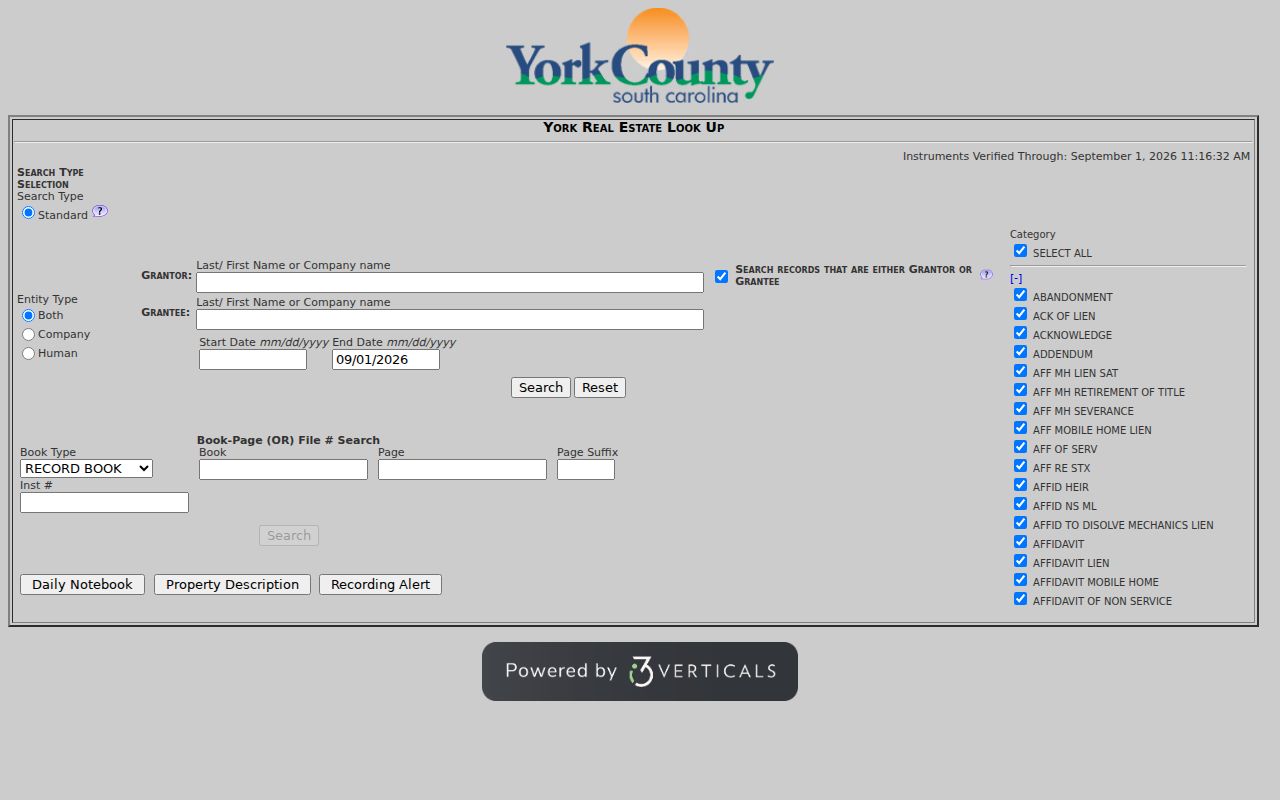
The results must be read with the deed’s legal description and recorded parties, not treated as a complete address history from a result title alone.
York County Address, Parcel First
Start with the present parcel in York County One Map. The official application accepts a street address, Tax Map ID, the county parcel identifier, or subdivision. After selecting the result, use the report to capture the property address, parcel or Tax Map ID, appraisal account, subdivision and lot clues, mailing and physical-address, or situs, distinction if visible, legal description, prior grantor, and any plat link. The map geometry is approximate. A recorded plat or deed controls the legal description and boundary.
Do not use a current map label to rewrite an older address. York County’s parcel layer was compiled and digitized from recorded plats, deeds, tax maps, and orthophotography, with original work from 1989 to 1995 and continuing updates. A historic record may therefore need a paper, microfilm, or directory comparison even when the current map looks complete. Keep the Tax Map ID and legal description beside every older form of the street address.
York County Records Handoff
York County has a record-type handoff that can interrupt a backward address search. The Historical Center has deed microfilm from 1785 through 1977 and directs transition work from 1977 through 1983 to the Register of Deeds. The online system places deeds from Jan. 1, 1979 forward, all plats, and mortgages from July 1, 1982 forward. Those dates overlap in places but do not make one online result a full chain. When the web trail stops, ask the Register of Deeds about the record type and transition period, then use the Historical Center microfilm or the state archival series.
The South Carolina Archives York County records guide identifies the county’s archival record groups and conveyance-book coverage.
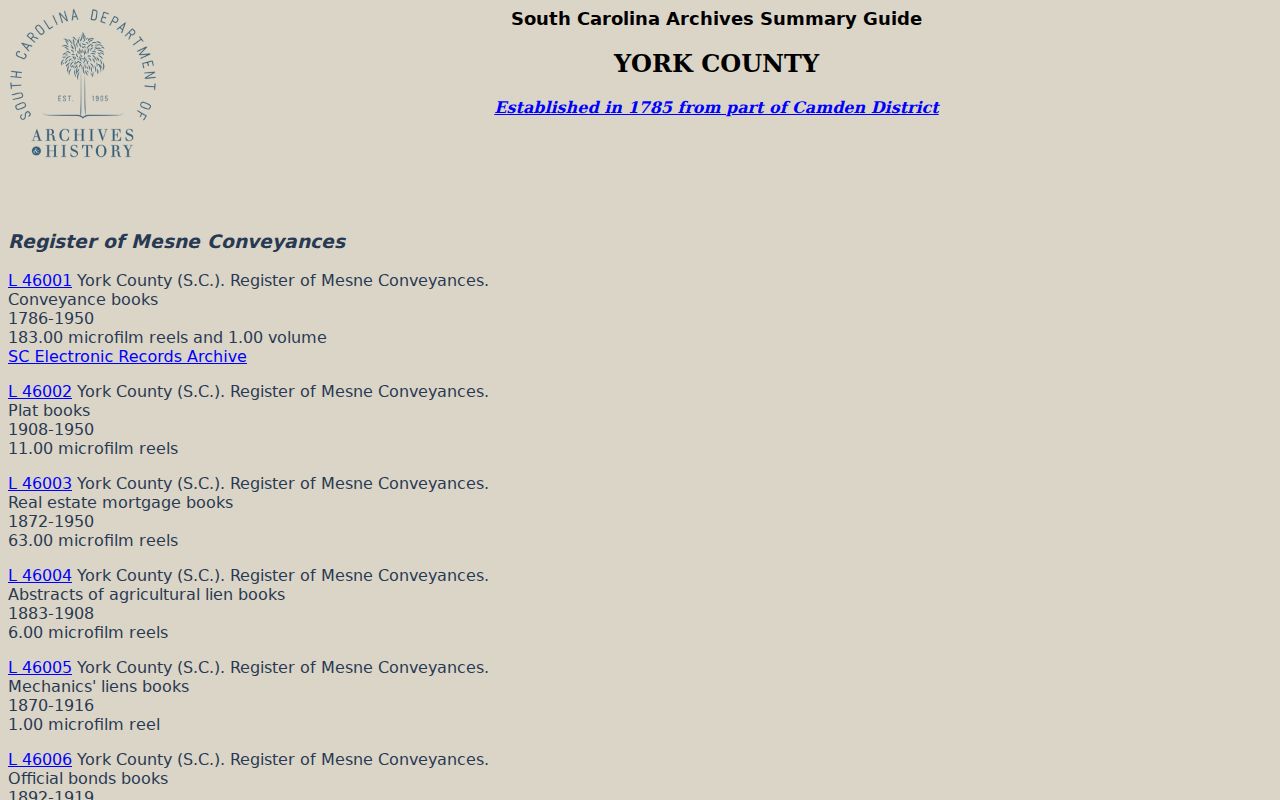
The guide provides an additional 1786-1950 conveyance-book route when a deed trail has moved beyond the web index.
Note: A missing online mortgage or deed result is not proof that no earlier book or microfilm record exists.
Trace York County Deed Records
The deed chain begins with a parcel, then follows recorded transfers backward one instrument at a time. Read the actual deed whenever available. Capture the instrument type, grantor and grantee names, recording date, book, page or document number, consideration when stated, legal description, and plat reference. Older documents may not use a current street number, which is why legal description and plat information matter. They distinguish the same land from another parcel with a similar street name or from a later renumbered address.
- Confirm the present parcel in One Map by address, Tax Map ID, and subdivision, then save its property report and legal-description clues.
- Search the current recorded party as a grantee in the online Register of Deeds index and open the transfer instrument.
- Use the grantor from that deed as a grantee in an earlier transfer, checking the legal description and plat reference at every step.
- Repeat deed by deed rather than linking names only. A shared name does not establish the same tract.
- At the web cutoff, use the Register of Deeds counter for the handoff and continue in Historical Center microfilm or the SCDAH conveyance series.
- Grantor
- The party who conveys an interest in the recorded instrument.
- Grantee
- The party who receives that recorded interest.
- Chain of title
- The sequence of recorded transfers connected by the same tract’s legal description.
- Legal description
- The lot, block, plat, metes-and-bounds, or other land description that carries a tract across address changes. Metes and bounds uses stated directions and distances.
York County Directory Cross-References
For people who may have lived at an address rather than held the recorded land interest, move to the local address books after the deed work. Winthrop’s York County Cross Reference Directory finding aid describes a 1968 bound volume with city and rural coverage for Rock Hill, York, Clover, Hickory Grove, Fort Mill, Sharon, and smaller communities. It has street and numerical-phone sections. This is the verified countywide reverse-reference source, but it is one dated snapshot. The collection details and ways to read the books are available through the York County city directory collections.
The Winthrop cross-reference finding aid documents the 1968 county and city directory volume.
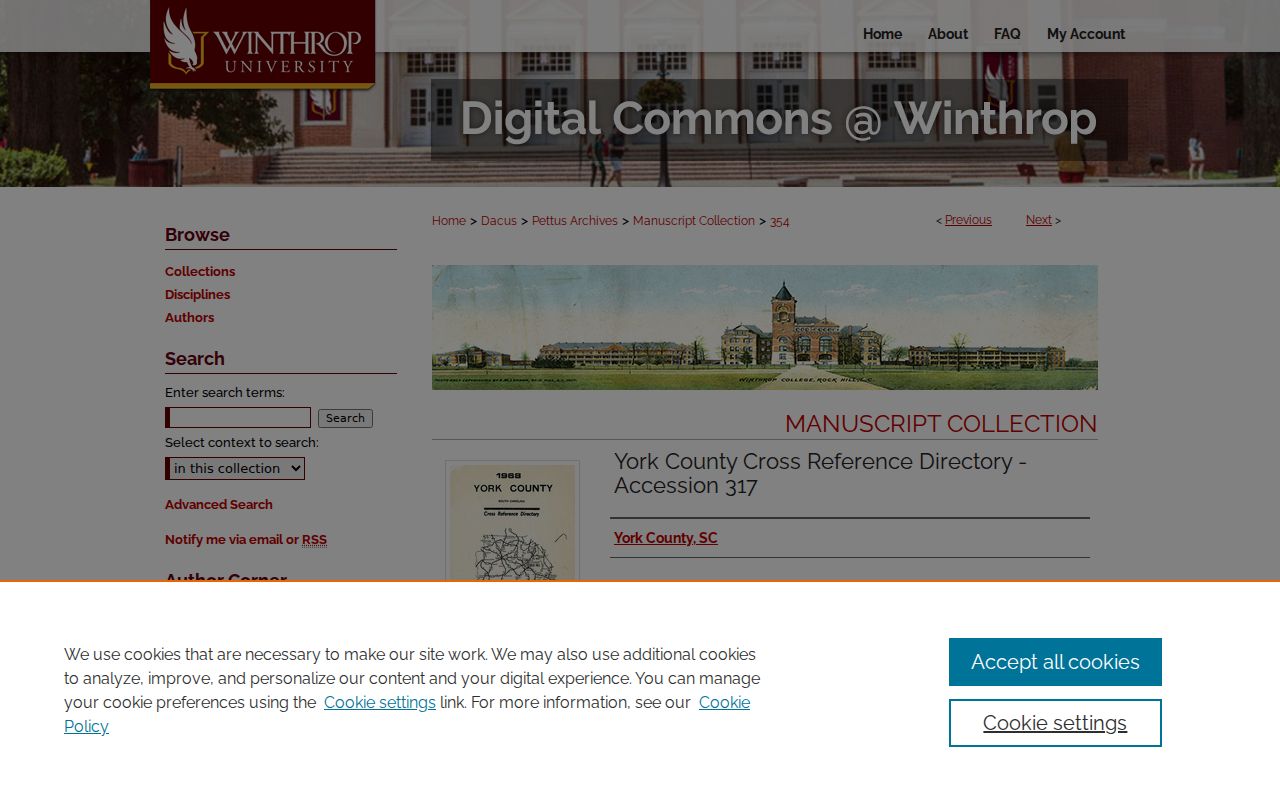
The address and numerical-phone arrangements can supply a household lead that should be checked against a deed, census page, or local notice.
York County Census Records
Directories and census schedules answer related but different questions. A directory can place a listed head of household near its publication date. A census records a household on its census date. Work from an address or surname into the nearest available directory, then pair that evidence with the federal census that brackets the period. Preserve the date of each source. A household may move between an annual directory and a decennial census, and names may be printed with different spellings, order, diacritics, or marriage-related forms.
- Copy the exact directory spelling, spouse detail, street number, and publication year.
- Find the nearest publicly released census year and record its residence date separately from the directory’s publication date.
- Check nearby directory editions for a move, an older street form in parentheses, or a changed listing.
- Use selected YCHistory newspaper material, Historical Center microfilm, obituary files, or probate material to test a change in the household trail.
Note: A directory head of household, a census resident, and a deed party may be different people at the same address.
York County Place Records
Place evidence dates the address, not the people. The Library of Congress Rock Hill Sanborn set supplies three freely viewable sheets from 1894. It can help compare a building footprint, street pattern, and nearby uses with a directory or deed description. The Historical Center also holds Sanborn, school-district, topographic, and road maps, including a 1910 York County map that shows individual landowners, schools, and churches. Keep that map evidence separate from a claim about an occupant.
A historic address can also have more than one form. The Rock Hill survey says a following directory may show an older street name or number in parentheses after a change. York County’s addressing manual reports both linear County numbering and axial municipal systems, while about 250 older half-number addresses remain grandfathered. Retain the older and newer forms, the jurisdiction, and the date before rejecting an apparent match.
York County Estate Records
Estate records can close a family trail when a directory, obituary, or land transfer points to a death or succession. York County Probate says estate records from 1975 to the present are online through the statewide probate search, updated each evening. Viewing is free and a printed document costs $2. Marriage licenses and estate files are also available on public computers at the Government Center. Search an exact spelling first, then use the case material to identify the type of record rather than assuming every surname hit belongs to the same family.
The York County Probate Court page explains the local estate and marriage-record access route.
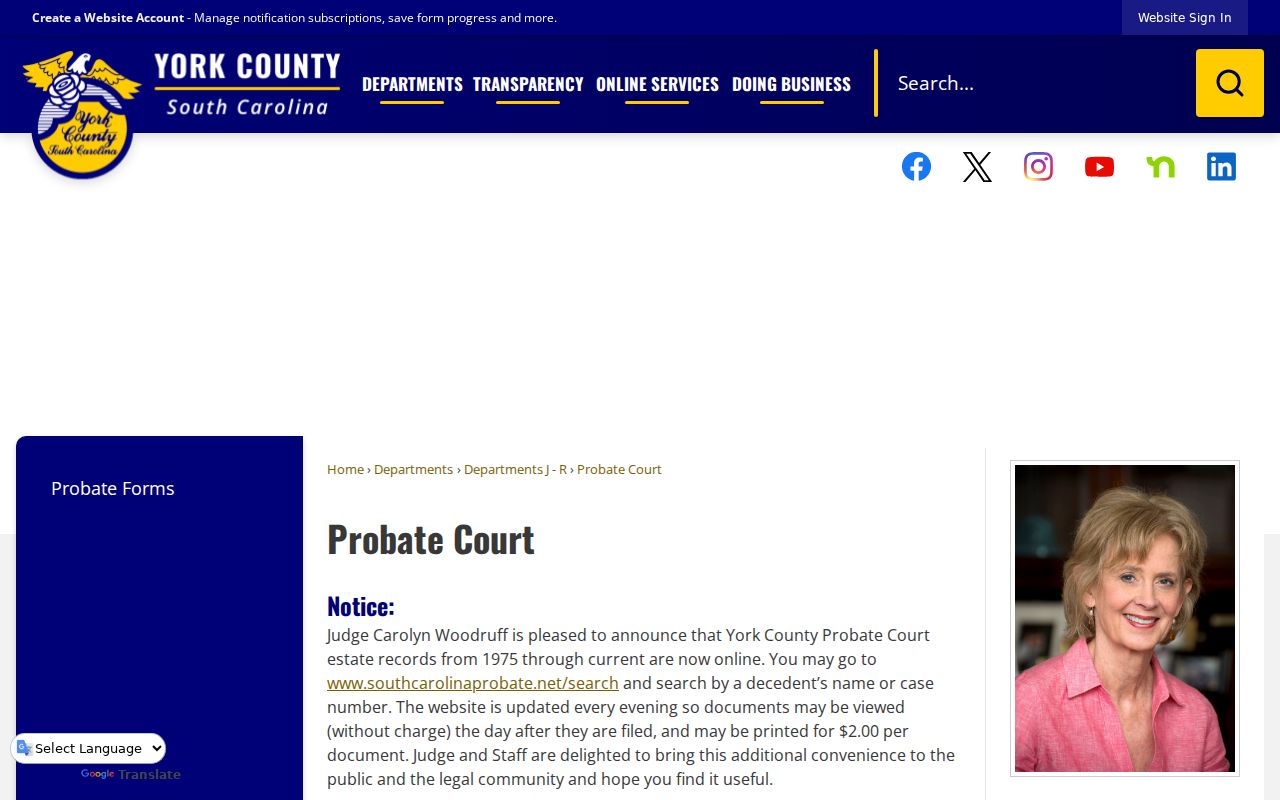
Probate evidence can add heirs, estate administration, or a date clue, but it does not replace the address-specific legal description in the deed chain.
York County Household Records
Past residents are best treated as a set of evidence layers. A deed trail can establish recorded land transfers. A local directory can place a listed household at an address. Census, newspaper, cemetery, school, church, and estate sources may add dates or family relationships. The Historical Center’s Hart Collection contains information on more than 75,000 York County-area families, but its compiler did not retain source citations. Use it as a lead to an original document, not as a substitute for one.
The Historical Center also holds the Yorkville Enquirer microfilm, early deeds and wills, census reels, voter registrations, surname files, church records, and a 1910 landowner map. York County Library’s YCHistory supplies selected newspaper articles, manuscripts, and church histories. These access channels are useful when an address trail reaches beyond recorded land papers, provided each item is dated and compared with the other evidence.
Lawful use. Use York County previous-resident records for family history, house history, estate research, or another lawful personal purpose. Do not use names or addresses to stalk, harass, or harm anyone.